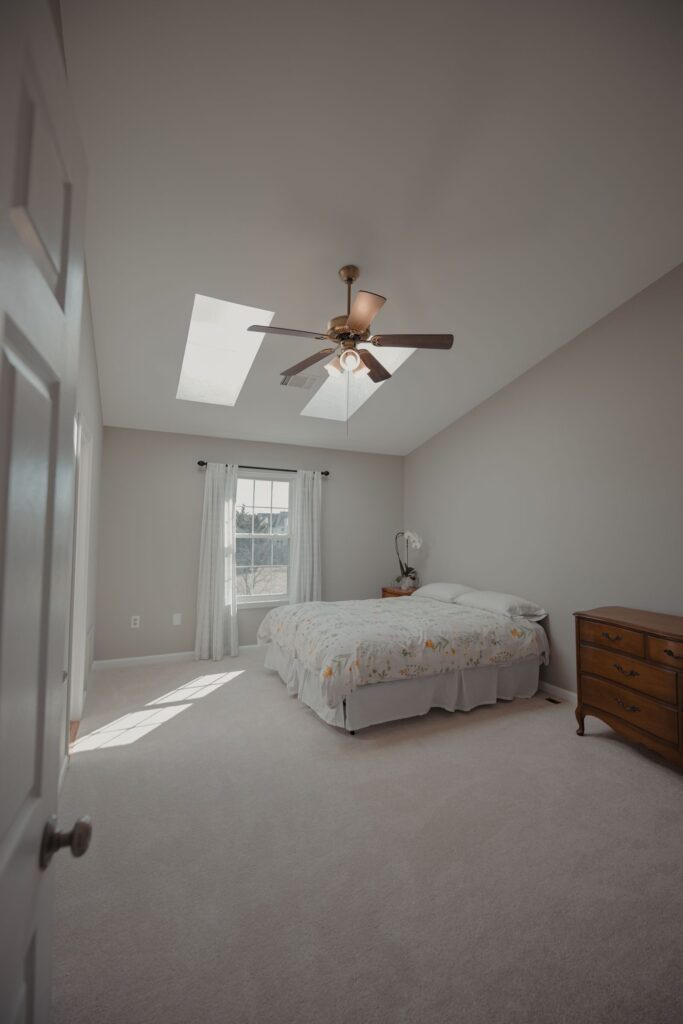
Brisbane's wet season brings the kind of humidity that ducted systems struggle with. Warm, moist air meets cold surfaces inside the unit and along the ducts, condensation forms, and dust gives mould something to feed on. In apartments with limited cross-ventilation, the problem often shows up first as dark spotting on the ceiling around a diffuser, or as a musty smell that hangs in the bedroom when the cooling switches on overnight. Spraying something into the vents does not fix it, because the growth is sitting on a layer of grime.
That is why we always clean before we treat. The affected ducts and outlets are brushed and extracted under negative pressure to remove the dust and loose growth, and the diffusers are taken down and washed by hand. Only then do we apply a sanitising treatment suited to air conditioning systems, focusing on the areas where we found contamination. We let you know beforehand what we are using and whether anyone should stay out of particular rooms while it is applied.
Mould returns when the conditions that caused it stay the same. While we work, we keep an eye out for likely moisture sources, such as a blocked condensate drain, a bathroom exhaust fan that vents into the ceiling, or an outlet sitting right above a steamy kitchen. We point these out so you can address them, because tackling the cause is what keeps a treated system from sliding back into the same state.